Jackery Explorer 300 vs EcoFlow RIVER 2 Max in Canada: Which Backup Size Fits?
Compare Jackery Explorer 300 and EcoFlow RIVER 2 Max in Canada by battery capacity, AC output, recharge speed, battery chemistry, ports and home-backup fit.
10 min read
Work & Smart Living · Home Office
The Jackery Explorer 300 is the better fit when low weight and simple short-duration backup matter most; the EcoFlow RIVER 2 Max is the stronger choice when you need materially more stored energy, a 500W-class inverter, faster AC recharging and longer-cycle LFP chemistry. This is intentionally a tiered comparison. The EcoFlow is not just a different brand version of the Jackery: the compared 512Wh RIVER 2 Max carries about 75% more listed battery capacity than the 293Wh Explorer 300 and targets heavier backup duty.
Quick Verdict
Choose the Jackery Explorer 300 for phones, laptops, networking gear and other modest loads when a roughly 7-pound unit is easier to store and move. Choose the EcoFlow RIVER 2 Max when the extra capacity, 500W rated AC output, 100W USB-C, one-hour-class AC recharge and 3,000-cycle LFP specification justify roughly doubling the carrying weight.
Neither is a whole-home backup system. Before plugging in an appliance, check its running wattage, startup behaviour and the power station’s rated output. Resistive heaters, kettles, hair dryers and many kitchen appliances are outside the practical range of these compact models.
As an Amazon Associate, Hamejur may earn from qualifying purchases. This comparison is price-neutral; check Amazon.ca for current purchase details.
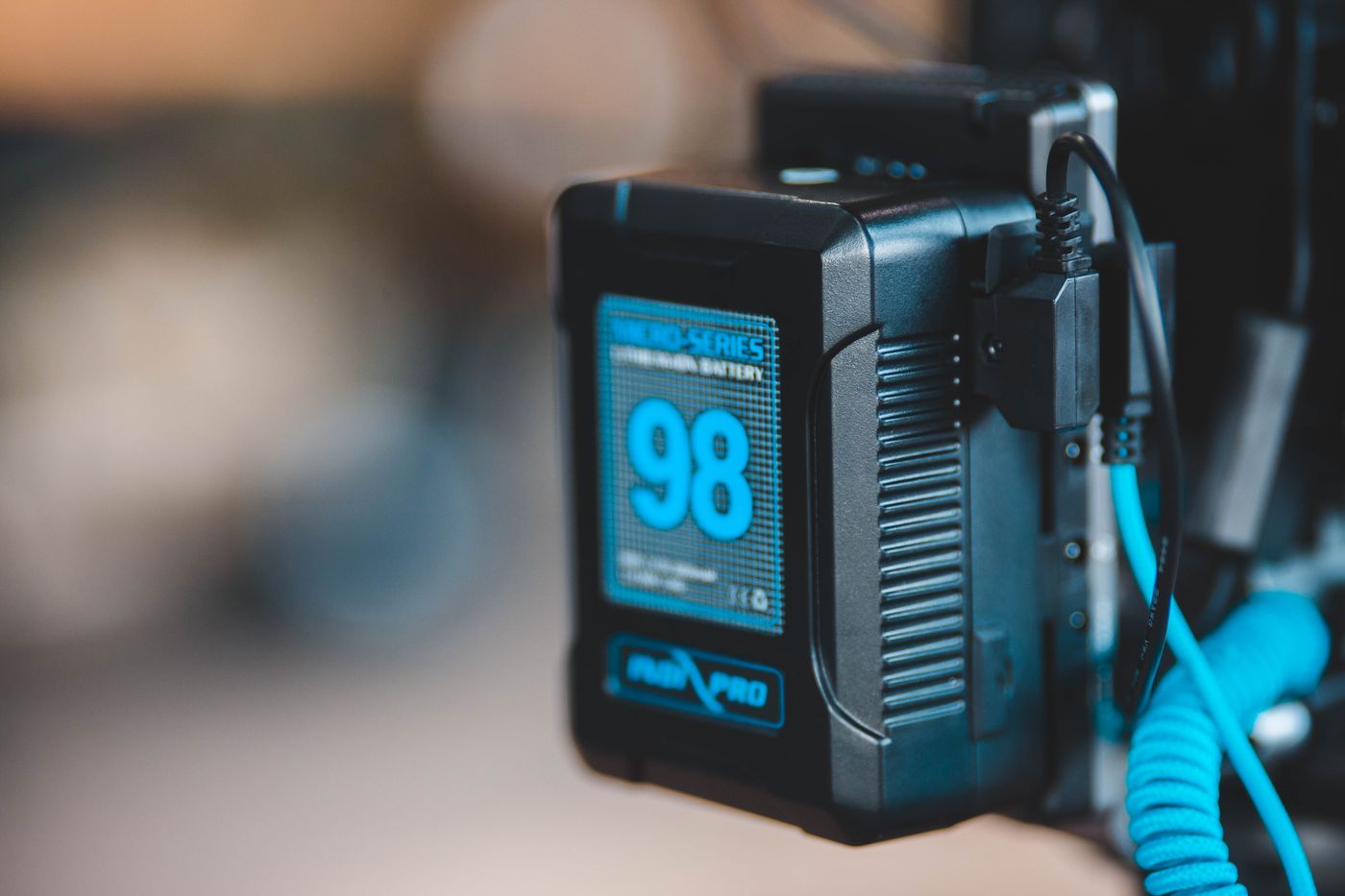
Portable backup context for comparing capacity, load limits and charging needs. Stock photo via Pexels.
Products compared
Current picks at a glance
Price-neutral comparison based on verified product identity, official specifications, and buyer fit. Check Amazon.ca for current price and availability.
Amazon.ca prices and availability can change. Hamejur does not publish cached marketplace prices in no-API mode.
At-a-glance decision table
Decision point
Jackery Explorer 300
EcoFlow RIVER 2 Max
Buyer implication
Listed capacity
293Wh
512Wh on the compared Amazon.ca EFR610 listing
EcoFlow stores about 75% more nominal energy.
Rated AC output
300W, 500W surge
500W rated; X-Boost up to 1000W for compatible loads
EcoFlow has more headroom, but X-Boost is not the same as a 1000W continuous inverter.
Battery chemistry
Lithium-ion NCM
LFP
EcoFlow’s chemistry is paired with a much higher listed cycle-life figure.
Listed cycle life
Current Jackery support lists 800 cycles to at least 80%
3,000 cycles to 80%+
Frequent cycling favours the EcoFlow architecture.
Weight
About 7.1 lb / 3.2 kg
About 13.2 lb / 6.1 kg
Jackery is much easier to move between rooms or shelves.
AC recharge
About 4.5 h by AC alone; faster when AC and USB-C input are combined
About 60 min full AC recharge listed
EcoFlow is easier to turn around quickly between outages.
Original editorial illustration, not a manufacturer photograph or hands-on test.
What matters most in a compact backup battery
Start with two separate numbers: watt-hours tell you how much energy is stored, while watts tell you how large a load the inverter can support at one time. A 500Wh battery does not automatically run a 1000W appliance, and a 1000W inverter does not tell you how long a battery will last.
For a transparent comparison, divide listed watt-hours by the load only as a theoretical upper bound. At a steady 60W load, 293Wh corresponds to about 4.9 nominal hours and 512Wh to about 8.5 nominal hours before inverter, conversion and standby losses. Real runtime will be lower and varies by port, temperature, battery state and device behaviour. The useful insight is the capacity ratio, not the decimal-point estimate.
Battery and charging architecture differences
Jackery prioritizes compactness and simple output
The Explorer 300 uses a 293Wh lithium-ion NCM battery with a 300W pure-sine AC inverter. Jackery’s current support material lists about 3.2 kg weight and 800 cycles to at least 80% capacity. Its 60W USB-C PD port can both charge compatible devices and participate in faster combined recharging.
That design makes sense for a small emergency shelf battery or mobile workstation where you are primarily backing up laptops, phones, a modem/router or low-power electronics. Its limitation is straightforward: 300W is not much AC headroom, and the battery’s cycle-life specification is substantially lower than the LFP EcoFlow.
EcoFlow prioritizes higher throughput and frequent cycling
The compared Amazon.ca RIVER 2 Max ASIN is the 512Wh EFR610 generation. EcoFlow lists 500W rated AC output, X-Boost operation for certain higher-wattage loads, LFP chemistry and 3,000 cycles to 80%+ capacity. The RIVER 2 family also supports app control and rapid AC charging.
Original editorial illustration, not a manufacturer photograph or hands-on test.
There is an important current-model note for Canadian buyers: EcoFlow’s newer Canadian retail page now shows a product labelled RIVER 2 Max 500 with 499Wh capacity, while the Amazon.ca ASIN compared here identifies the older 512Wh RIVER 2 Max. Match the exact model/ASIN rather than assuming every page called “RIVER 2 Max” has identical capacity.
Product breakdowns
Jackery Explorer 300
The Explorer 300 is best understood as a lightweight electronics backup rather than an appliance backup. It offers two AC outlets, USB outputs including 60W USB-C PD, a car-style DC output and a built-in BMS. At about 7.1 pounds, it is easy to pull from a closet, move to a home-office desk or carry to another room during an outage.
The current Jackery Canada material lists 293Wh capacity, 300W output and 500W surge. Jackery also says the unit can recharge while powering connected devices. For ownership planning, the battery is NCM rather than LFP; current Jackery support lists 800 cycles to at least 80% capacity.
Best fit: short outages, laptop/router backup, charging electronics and buyers who value low weight. Watch for: the 300W inverter ceiling and slower AC-only recharge compared with newer high-input LFP designs.
Amazon.ca prices and availability can change. Check the product page for current purchase details.
EcoFlow RIVER 2 Max
The RIVER 2 Max steps into a different duty class. The compared Amazon.ca listing identifies 512Wh capacity and the EcoFlow RIVER 2 family documentation lists 500W rated output, up to 1000W X-Boost support for compatible appliances, 100W USB-C and a one-hour full AC recharge claim. EcoFlow also lists LFP cells with 3,000 cycles to 80%+.
That combination is more appealing if the unit will be cycled frequently or expected to run several electronics for a longer outage. The trade-off is portability: around 13.2 pounds is still portable, but it is roughly twice the Jackery’s weight.
Best fit: longer home-office backup, more devices, higher continuous loads within the 500W rating and frequent cycling. Watch for: X-Boost should not be read as permission to run any 1000W appliance normally; some loads may not operate correctly when voltage is managed to stay within the system’s limits.
Amazon.ca prices and availability can change. Check the product page for current purchase details.
Scenario-based decision guide
Modem/router plus one laptop: either can work; the Jackery is easier to justify if portability is the priority.
Two workstations or a longer outage: RIVER 2 Max’s larger capacity gives substantially more energy margin.
Frequent charge/discharge cycling: EcoFlow’s 3,000-cycle LFP specification is the stronger ownership story.
Need to recharge between rolling outages: EcoFlow’s one-hour-class AC recharge is a major practical advantage.
Need to carry the unit regularly: the Explorer 300’s roughly 7.1-pound weight is much easier to live with.
Load planning and safe setup
Before an outage, write down the running wattage of the devices you actually intend to power. Add simultaneous loads together and leave margin below the inverter’s continuous rating. Motors, compressors and power supplies can have startup behaviour that differs from their steady draw, so a device rated below the inverter’s headline wattage is not automatically guaranteed to start.
Original editorial illustration, not a manufacturer photograph or hands-on test.
For a home office, prioritize direct DC or USB-C power when practical because it can avoid an extra AC conversion step. Keep ventilation openings clear, use the manufacturer’s charging cables, and store the battery within the recommended temperature range. These are battery systems, not indoor gasoline generators, but they still require normal electrical and thermal care.
A useful backup plan starts with actual wattage, runtime and recharge requirements rather than the largest marketing number. Stock photo via Pexels.
Battery aging, storage and outage readiness
A backup battery is only useful if it is charged when the power fails. Create a simple routine: check state of charge periodically, install firmware/app updates when relevant, inspect cables, and follow the manufacturer’s long-term storage guidance. Avoid storing the unit next to heaters, in a wet basement location or in an unconditioned space outside its specified temperature range.
Cycle life is also a usage question. A household that discharges a station a handful of times per year may never approach the cycle-life limit of either product. Someone using the unit daily as part of a solar or mobile-work routine has a much stronger reason to prioritize LFP and its higher listed cycle count.
Avoidable buying mistakes
Do not compare portable power stations only by the biggest “boost” number. Compare rated continuous AC output first, then battery capacity, charging input, port mix and chemistry. Also avoid assuming watt-hours equal usable AC watt-hours; conversion losses are real. Finally, match the exact Amazon.ca model because product families can retain similar names while capacity or port specifications change.
Possibly for some compact or efficient units, but do not assume it. Check both running wattage and compressor startup demand. The Jackery’s 300W continuous rating is especially restrictive; the EcoFlow’s 500W rating gives more headroom but still does not cover every refrigerator.
Is the EcoFlow’s 1000W X-Boost the same as a 1000W inverter?
No. EcoFlow lists the RIVER 2 Max as a 500W rated AC-output unit and uses X-Boost to support certain higher-wattage devices. Treat 500W as the normal continuous comparison number and confirm compatibility for any load above it.
Which battery chemistry lasts longer?
On the manufacturers’ current specifications, EcoFlow’s LFP battery is rated for 3,000 cycles to 80%+ capacity, while current Jackery support lists the Explorer 300 at 800 cycles to at least 80%. Actual calendar life also depends on temperature, storage and use.
Is a portable power station a replacement for a UPS?
Not necessarily. A dedicated UPS is designed around automatic transfer and power-conditioning behaviour for computers and networking gear. Some power stations provide EPS-style transfer, but transfer time and behaviour should be checked for the exact load. Choose based on the job rather than treating the categories as interchangeable.
Which would Hamejur choose for a home office?
I would choose the RIVER 2 Max for a home office that genuinely needs longer outage runtime or frequent cycling. I would choose the Explorer 300 when the backup list is modest and moving a light unit around the home matters more than maximum stored energy.
What I would choose
The EcoFlow RIVER 2 Max is the stronger backup platform when capacity, recharge speed and battery longevity justify the extra weight. The Jackery Explorer 300 remains easier to live with as a small grab-and-go electronics battery. The deciding question is not brand loyalty: it is whether your actual outage load needs roughly 300W/293Wh class capability or benefits from stepping up to 500W/512Wh class capability.
Check current listings
Compare the current Amazon.ca product pages
Use the product pages to confirm the exact variant, current price and availability before ordering.
Hamejur verified exact product identity by model and ASIN through public Amazon.ca evidence on September 12, 2026. Technical claims were cross-checked against Jackery Canada’s Explorer 300 documentation, current Jackery support material, and EcoFlow’s RIVER 2 family documentation. The current EcoFlow Canada retail page was also checked to flag the newer 499Wh “RIVER 2 Max 500” naming versus the 512Wh Amazon.ca ASIN compared here. Static prices, ratings, review counts and stock claims are excluded. Context images are illustrative stock photography, not product photos.
Compare Chamberlain myQ Smart Garage Control and Meross MSG100 in Canada by opener compatibility, door sensing, smart-home platforms, installation and everyday control.