Prices and availability can change. Use the Amazon.ca product page for the latest product details before ordering.
Work & Smart Living · Home Office
The best 1TB portable SSDs in Canada can look almost identical on a retailer page because the Samsung T7 Shield, Kingston XS1000 and SanDisk Extreme all sit in the same 10Gbps USB 3.2 Gen 2 performance class. The useful differences are not simply which box says 1,050 MB/s. Samsung spends more of its design budget on ruggedness, thermal management and hardware encryption; Kingston strips the enclosure down to an extremely light 28.7 g drive; and SanDisk combines IP65 protection with a five-year warranty and broad USB-C/USB-A device support.
Fast Answer
Samsung T7 Shield is the best premium choice when ruggedness and built-in security matter most. It combines up to 1,050 MB/s reads and 1,000 MB/s writes with UASP, Dynamic Thermal Guard, IP65 protection, up-to-3 m drop resistance and AES-256 hardware encryption. Kingston XS1000 is the best lightweight value option: it targets the same 1,050/1,000 MB/s class at only 28.7 g and carries a five-year warranty, but it does not have the IP/encryption feature set of the rugged drives. SanDisk Extreme is the balanced rugged alternative, with IP65 protection, up-to-3 m drop resistance, AES-256 password protection and a five-year limited warranty.
Affiliate disclosure: Hamejur may earn a commission from qualifying Amazon.ca purchases made through links in this guide, at no extra cost to you.
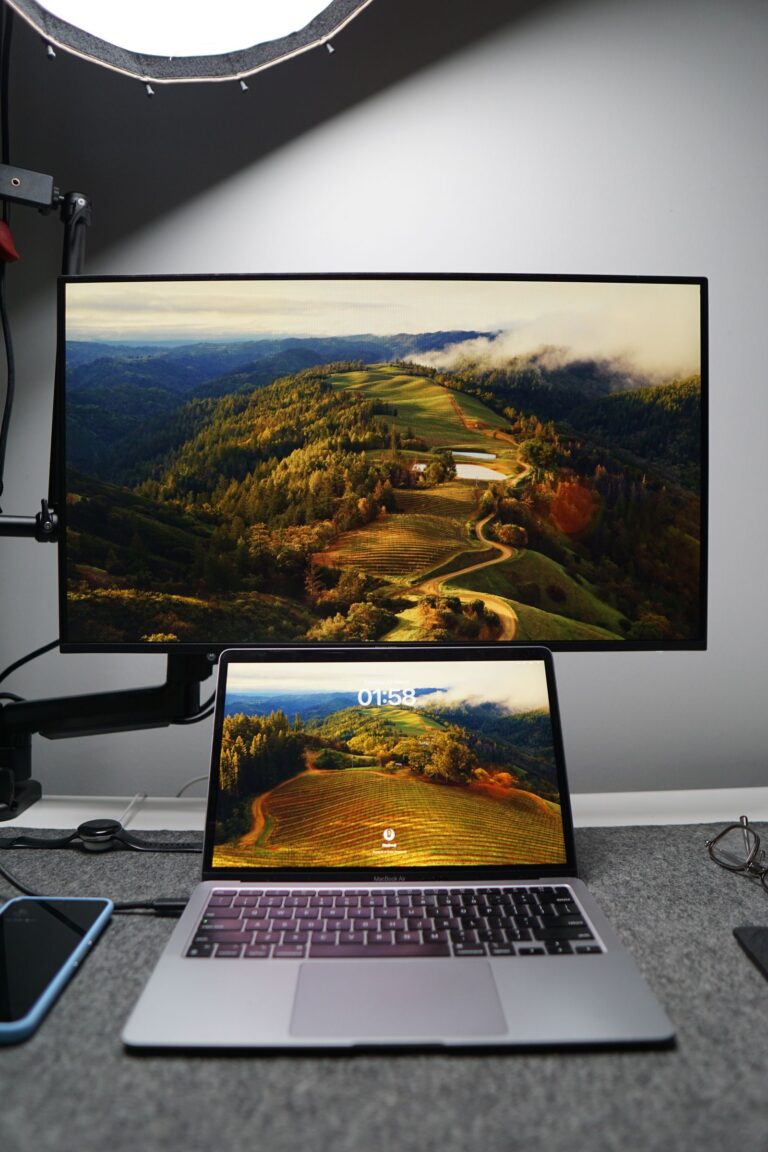
A 1,050 MB/s-class SSD still depends on the host USB controller and cable; a USB-C plug alone does not guarantee a 10Gbps connection. Stock photo: Arina Krasnikova / Pexels.
1TB Portable SSDs Compared
Drive
Interface / rated speed
Durability
Security / warranty
Best fit
Samsung T7 Shield 1TB
USB 3.2 Gen 2 10Gbps; up to 1,050/1,000 MB/s
IP65; up to 3 m drop protection
AES-256 hardware encryption; 3-year warranty
Premium rugged work/travel use
Kingston XS1000 1TB
USB 3.2 Gen 2; up to 1,050/1,000 MB/s
No published IP rating; 28.7 g enclosure
No built-in encryption claim in official spec; 5-year warranty
Lightweight value and everyday backup
SanDisk Extreme 1TB
USB 3.2 Gen 2; up to 1,050/1,000 MB/s
IP65; up to 3 m drop protection
256-bit AES password protection; 5-year warranty
Rugged cross-device storage
How the Storage Technology Differs
10Gbps USB does not mean 10Gbps file copies
USB 3.2 Gen 2 provides a 10-gigabit-per-second signalling link, while SSD performance is normally quoted in megabytes per second. Protocol overhead and controller limits mean roughly 1,000–1,050 MB/s sequential performance is normal for this class. A USB-C connector by itself says nothing about speed: the computer still needs a 10Gbps-capable USB mode to approach the drives’ rated figures.
The host controller and cable are part of the performance chain
Samsung explicitly requires a USB 3.2 Gen 2 host, compatible cable and UASP support for its maximum figures. Kingston and SanDisk also specify USB 3.2 Gen 2 for their 1,050 MB/s class. Plugging the drive into an older 5Gbps port, USB 2.0 port or slow hub makes the connection the bottleneck regardless of how fast the SSD controller is.
Headline sequential speed is not sustained-workload proof
Maximum sequential figures are useful for identifying interface class, but they do not prove identical behaviour during every long write. NAND, controller firmware, cache behaviour and temperature can affect sustained transfers. Samsung specifically documents Dynamic Thermal Guard on T7 Shield. Hamejur has not independently benchmarked sustained-write curves for these drives, so this guide does not turn manufacturer peak figures into claims about hours-long workloads.
Rugged ratings are a genuine architecture difference
Samsung T7 Shield and this SanDisk Extreme model are rated IP65 and for drops up to 3 metres under their manufacturers’ stated tests. Kingston XS1000 is designed for portability but its official specification does not publish an IP ingress-protection rating. That does not make Kingston unsuitable for normal travel; it means buyers who expect dust, water spray or rough field handling have more documented enclosure protection with Samsung or SanDisk.
Encryption is not implemented equally
Samsung lists AES-256 hardware encryption managed through its portable SSD software. SanDisk lists password protection using 256-bit AES encryption, with platform limitations in its software disclosures. Kingston’s XS1000 specification focuses on storage performance and compatibility and does not advertise an equivalent built-in encryption feature. If protected portable data is a requirement, use an operating-system encryption workflow or choose a drive whose supported security model matches your devices.
Samsung T7 Shield 1TB: Best Premium Rugged and Encrypted Option
T7 Shield combines a PCIe NVMe-based internal storage path with USB 3.2 Gen 2 at 10Gbps. Samsung rates the 1TB model for up to 1,050 MB/s sequential read and 1,000 MB/s sequential write with UASP support. Dynamic Thermal Guard is part of the controller/enclosure strategy for managing heat during large transfers.
The enclosure is the main reason to pay for Shield instead of a bare portable SSD. Samsung lists IP65 dust/water resistance and drop resistance up to 3 metres under its stated test conditions. The rubberized exterior adds grip but also contributes to a 98 g weight—over three times the official weight of Kingston XS1000.
Samsung documents AES-256 hardware encryption and password management through Samsung Portable SSD software, plus Samsung Magician support for drive management and firmware on supported platforms. Official compatibility covers Windows, macOS and Android, while noting that host configuration or reformatting can affect compatibility.
USB-C-to-C and USB-C-to-A connectivity makes the package easy to move between newer and older computers. An adapter does not make an old port faster, however; the host still needs a 10Gbps Gen 2 link to reach this performance class.
Choose it when: ruggedness, hardware encryption and documented thermal management are more important than minimizing price or weight.
Kingston XS1000 1TB: Best Lightweight Value Option
Kingston XS1000 reaches the same headline interface class through a much smaller physical design. Kingston specifies USB 3.2 Gen 2, up to 1,050 MB/s reads and 1,000 MB/s writes, 3D NAND and a weight of only 28.7 g. At 69.54 × 32.58 × 13.5 mm, it is closer to a large key fob than a conventional portable hard drive.
Its strongest technical advantage is efficiency of size and mass rather than environmental protection. Kingston does not publish an IP rating for XS1000 in the current specification. Optional rubber sleeves exist, but an accessory sleeve should not be confused with a certified water/dust ingress rating.
Kingston includes a USB-C drive-to-USB-A host cable plus an A-to-C adapter, and publishes compatibility with Windows 10/11, macOS, Linux, Chrome OS, Android and iOS/iPadOS versions in its support list. That is useful for households moving files among computers, tablets and phones, although filesystem formatting still determines what each platform can read and write.
Kingston backs XS1000 with a five-year limited warranty and free technical support. The official specification does not advertise the built-in hardware-encryption system Samsung does, so security-conscious buyers should plan an OS/software encryption strategy rather than assuming the drive contains the same feature set.
Choose it when: you want 10Gbps-class transfer capability in the smallest/lightest package here and do not need an IP65 rugged enclosure or built-in encryption feature.
SanDisk Extreme 1TB: Best Rugged Option with a Five-Year Warranty
SanDisk Extreme 1TB is directly comparable on interface performance: USB 3.2 Gen 2 with manufacturer-rated sequential speeds up to 1,050 MB/s read and 1,000 MB/s write. The official Canadian page lists compatibility with USB Type-C phones, laptops and tablets, plus current Windows, macOS, Android and iOS requirements.
Its enclosure is rated for up-to-3 m drops and IP65 water/dust resistance under SanDisk’s test conditions. A silicone shell and integrated carabiner loop are designed for travel. SanDisk also provides a five-year limited warranty, giving it the longer warranty period of Kingston while retaining a documented rugged rating closer to Samsung’s.
Password protection uses 256-bit AES encryption, but SanDisk explicitly notes platform limitations for the password/encryption software. Check the device where you plan to unlock protected files rather than assuming a password set on a desktop will behave identically on every USB-C phone or tablet.
A USB-C-to-C cable and USB-C-to-A adapter broaden physical compatibility. As with the other drives, the adapter does not upgrade an older USB port to 10Gbps performance.
Choose it when: you want documented IP65 ruggedness and a five-year warranty without making the SSD as light/minimal as Kingston.
Which Portable SSD Fits Your Workflow?
This is an intentionally tiered comparison: all three perform the same storage job and share the 10Gbps/roughly-1,050 MB/s class, but the higher-priced models may be buying enclosure protection, security and management features rather than more headline USB bandwidth.
Travel and field use: Samsung T7 Shield and SanDisk Extreme have IP65 and up-to-3 m drop claims.
Lightest possible kit: Kingston XS1000 weighs only 28.7 g.
Five-year warranty priority: Kingston and SanDisk publish five-year limited warranties; Samsung lists three years for T7 Shield.
Large media transfers: verify a true 10Gbps USB 3.2 Gen 2 port and use an appropriate cable.
Windows + Mac file shuttle: choose the filesystem for cross-platform needs before loading the drive with important data.
What the 1,050 MB/s Rating Does—and Does Not—Tell You
Sequential speed favours large contiguous files
Manufacturer sequential ratings are most relevant to large videos, disk images and photo archives. A directory containing thousands of tiny files can behave differently because metadata and small random operations add overhead.
USB-C is not a speed specification
USB-C defines a connector, not one transfer rate. Verify the port supports at least 10Gbps USB 3.2 Gen 2. These drives can negotiate slower compatible modes, but then the link—not the SSD—is the ceiling.
Formatting changes compatibility
Cross-platform portable storage is often formatted as exFAT because Windows and macOS can both read/write it. NTFS or APFS may better suit a single-platform workflow. Reformatting erases data, so choose before loading the drive.
Portable storage is not automatically a backup
An SSD kept in the same bag as the laptop can be lost or damaged with it. Important data should exist in more than one independent location. Ruggedness reduces some physical risk but does not replace a backup strategy.
Firmware and utilities still matter
Portable SSDs contain controllers and firmware. Samsung, Kingston and SanDisk all maintain product-support resources. Check your exact model for relevant updates before relying on a drive for irreplaceable data.
10Gbps is the raw USB link signalling rate in gigabits per second. SSD performance is quoted in megabytes per second, and protocol overhead reduces usable throughput. Roughly 1,000 MB/s-class sequential performance is therefore normal for a well-implemented 10Gbps USB SSD.
Will these SSDs reach 1,050 MB/s through any USB-C port?
No. USB-C only defines the connector. The host port and cable need a sufficiently fast USB mode, and the computer/storage stack must be capable of sustaining the transfer.
Is IP65 waterproof?
No. IP65 indicates defined dust and water-jet resistance under test conditions; it is not an immersion rating. Follow the manufacturer’s handling and warranty conditions.
Can I use one portable SSD with both Windows and Mac?
Yes, commonly with exFAT. Reformatting to NTFS, APFS or another filesystem can change cross-platform access. Back up files first because formatting erases the drive.
Does Kingston XS1000 have hardware encryption?
Kingston’s current XS1000 specification does not advertise a built-in encryption feature comparable to Samsung’s AES-256 hardware encryption. If encryption is required, plan a supported operating-system or software-based encryption workflow.
Can I edit video directly from these drives?
The manufacturers position 10Gbps-class portable SSDs for high-throughput creative workloads, but suitability depends on codec bitrate, timeline complexity, host interface and sustained performance. Hamejur has not independently benchmarked video-editing workloads on these units.
What I Would Choose
I would choose Samsung T7 Shield when one portable drive must handle travel, work files and encrypted storage and I am willing to pay for those extra protections. I would choose Kingston XS1000 when the goal is simply fast 1TB portable storage in the smallest package and the current price advantage is meaningful. SanDisk Extreme is the middle path I would pick when I want IP65 ruggedness plus a five-year warranty and do not need Samsung’s specific management/security combination.
Sources and Method
Technical specifications were checked against official Samsung Canada T7 Shield, Kingston XS1000, and SanDisk Canada Extreme Portable SSD documentation. Manufacturer maximum speeds and durability ratings are specifications/claims, not independent Hamejur test results. Amazon.ca identity, current price, availability, product imagery and affiliate URLs are handled through Hamejur’s Amazon Creators API workflow.
Keep comparing
Related guides for your next decision
Continue with closely related Home Office comparisons selected by category, shared product topics, and reader intent.
Compare APC, CyberPower and Eaton 1500VA UPS systems by watt capacity, sine-wave output, AVR, runtime, transfer time, outlets, battery replacement and home-office…