YoLink Water Leak Sensor 4 vs GoveeLife H5059 in Canada: Which Leak System Fits?
Compare YoLink Water Leak Sensor 4 and GoveeLife H5059 for Canadian homes by range, local alarms, hub requirements, battery life and outage behavior.
7 min read
Products compared
Current picks at a glance
Price-neutral comparison based on verified product identity, official specifications, and buyer fit. Check Amazon.ca for current price and availability.
Amazon.ca prices and availability can change. Hamejur does not publish cached marketplace prices in no-API mode.
Work & Smart Living
Quick answer: YoLink Water Leak Sensor 4 is the stronger choice when you care about long-range LoRa coverage, local device-to-device automation and freeze-warning capability. GoveeLife H5059 is easier to justify when you want a straightforward gateway-based leak system with a loud local alarm, long battery target and simple app alerts.
Quick Verdict
Both systems are designed to put small sensors near washers, sinks, water heaters and other leak risks, but the architecture matters more than the alarm volume. YoLink emphasizes LoRa range and Control-D2D behavior; GoveeLife uses its H5044 gateway and Sub-1G communication for whole-home coverage. For detached garages, deep basements or future automatic shutoff expansion, YoLink has the more flexible system story. For a simpler multi-sensor alert setup, GoveeLife is compelling.
Affiliate disclosure: Hamejur may earn a commission from qualifying Amazon.ca purchases at no extra cost to you.
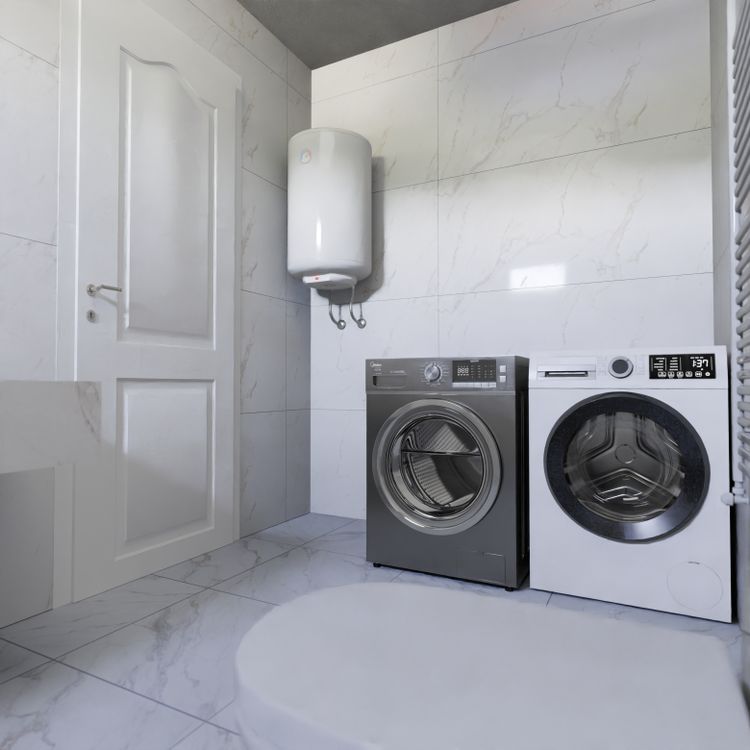
Leak sensors are most useful when placed where water would first collect near high-risk appliances.
At-a-glance decision table
Decision
YoLink Sensor 4
GoveeLife H5059
Wireless architecture
LoRa via YoLink Hub
Sub-1G via H5044 gateway
Local alarm
105 dB
Up to 105 dB
Battery target
5+ years typical
Up to 5 years
Water resistance
IP66 official Sensor 4 claim
IP67 official H5059 claim
Extra capability
Low-temperature / freeze warning
Adjustable alarm volume
What matters most in a smart leak detector
The useful question is not simply whether a sensor can detect water. A leak system needs to cover the actual risk zones, alert locally when phones are unavailable, report remotely when you are away, and remain dependable through long battery intervals. If you plan to add a motorized shutoff valve later, ecosystem behavior also matters.
The first key distinction is radio architecture. Both products avoid relying on a tiny Wi-Fi radio inside every floor sensor. That is useful in Canadian homes where basements, utility rooms and detached structures can be difficult radio environments.
Technology and architecture differences
YoLink uses LoRa communication between sensors and a YoLink hub. The company specifies long-range operation up to roughly a quarter mile in open air and supports Control-D2D, which allows compatible YoLink devices to act locally without relying on an internet round trip. Sensor 4 also adds a 105 dB sounder and low-temperature sensing.
GoveeLife H5059 sensors communicate with the H5044 gateway using Sub-1G radio. GoveeLife specifies up to 550 m / 1,804 ft communication range under stated conditions, a 105 dB adjustable alarm, IP67 water resistance and a five-year battery-life target. The gateway provides app and email alerts.
YoLink Water Leak Sensor 4 evaluation
Best fit: larger homes, difficult basements, detached structures and buyers who may expand into automated water shutoff. The sensor detects water from top and bottom electrodes, includes a local sounder and can warn about low-temperature conditions that may precede frozen-pipe problems.
Why choose it: the architecture is designed around long range and ecosystem automation. Control-D2D is especially meaningful because a compatible sensor-to-valve action can be designed to operate locally rather than depending entirely on cloud availability.
Watch for: full smart functionality requires a YoLink hub. The open-air range figure is not a promise of identical range through concrete, mechanical rooms or multiple floors.
Amazon.ca prices and availability can change. Check the product page for current purchase details.
GoveeLife H5059 evaluation
Best fit: buyers who want several small sensors around common leak points with a straightforward gateway and app. GoveeLife specifies dual sensing probes, loud local alerts, long battery life and IP67 protection.
Why choose it: the package is easy to understand: gateway plus sensors, local siren, remote notifications and long-range Sub-1G communication. Adjustable volume is useful when one sensor is in a bedroom-adjacent area and another is in a basement.
Watch for: H5059 sensors need the compatible H5044 gateway for smart functions. Do not confuse the range between sensor and gateway with Wi-Fi range from the gateway to your router.
Amazon.ca prices and availability can change. Check the product page for current purchase details.
Scenario-based decision guide
Detached garage or large property: lean YoLink. Simple washer, sink and water-heater coverage: GoveeLife is straightforward. Future automatic shutoff: YoLink deserves extra consideration because of its broader water-control ecosystem. Need freeze-warning information at the sensor: YoLink Sensor 4. Want adjustable local alarm volume: GoveeLife H5059.
Setup, compatibility and ownership
Both systems are hub-based. Put the hub where it has reliable network access and where its long-range radio can reach the sensor network. Then place sensors where water would first pool rather than where a leak is merely possible. Under a dishwasher, beside a water heater pan and behind a washing machine are more useful than a random shelf nearby.
Battery-life claims are best treated as maintenance targets rather than guarantees. Temperature, radio conditions, alarm events and usage can change real-world life. Build a recurring test habit into home maintenance even when the app reports healthy batteries.
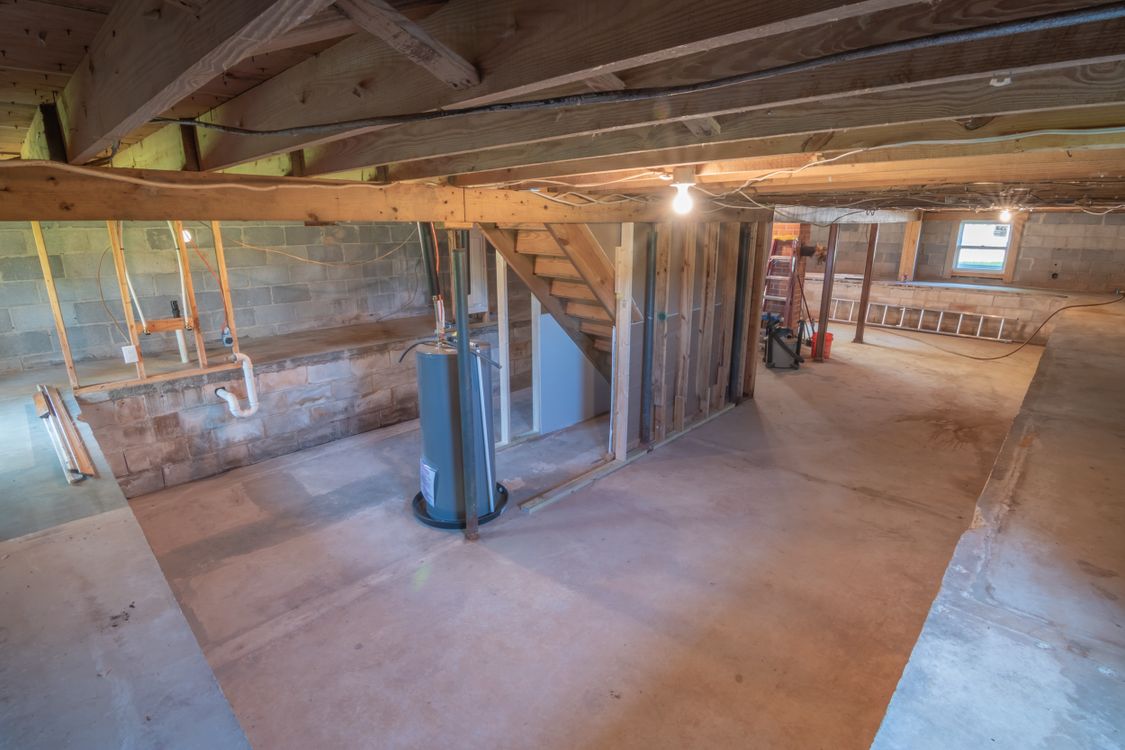
Long-range radio systems can be useful in basements and utility areas where ordinary Wi-Fi coverage is weaker.
Buying advice and avoidable mistakes
A common mistake is buying only one sensor for an entire home. Water damage starts in specific zones, so coverage density matters. Another mistake is assuming remote alerts alone are enough. A loud local alarm can still matter when your internet is down or your phone is muted.
Yes for their connected smart features. YoLink uses a YoLink hub; H5059 uses the GoveeLife H5044 gateway.
Which one has a freeze warning?
YoLink Water Leak Sensor 4 includes low-temperature sensing intended to warn about conditions that can contribute to frozen pipes.
Can they work in a basement?
Yes within their environmental specifications, and both use long-range radios intended to reach beyond typical short-range Wi-Fi sensor designs.
Do they make noise at the leak?
Yes. Both compared sensors include loud local alarms around the 105 dB class.
Can either automatically shut off water?
YoLink can be expanded with compatible YoLink shutoff hardware and local Control-D2D automation. Verify the exact valve and installation requirements before planning that system.
What I would choose
I would choose YoLink Sensor 4 for a house where leak detection may grow into a broader water-protection system, especially if detached spaces or shutoff automation matter. I would choose GoveeLife H5059 for a simpler gateway-and-sensor deployment where app alerts, a loud local alarm and long battery intervals are the main priorities.
Check current listings
Compare the current Amazon.ca product pages
Use the product pages to confirm the exact variant, current price and availability before ordering.
Hamejur used current official YoLink and GoveeLife documentation for technical claims and separately verified the exact marketplace identities through public web evidence. We did not perform hands-on flood testing. Amazon.ca prices and availability can change; check the product page for current purchase details.
Compare Chamberlain myQ Smart Garage Control and Meross MSG100 in Canada by opener compatibility, door sensing, smart-home platforms, installation and everyday control.