Tapo P110 vs Kasa EP25 in Canada: Which Energy-Monitoring Smart Plug Fits?
Tapo P110 vs Kasa EP25 in Canada: compare energy monitoring, ecosystem fit, setup and smart-home compatibility before choosing.
4 min read
Products compared
Current picks at a glance
Price-neutral comparison based on verified product identity, official specifications, and buyer fit. Check Amazon.ca for current price and availability.
Amazon.ca prices and availability can change. Hamejur does not publish cached marketplace prices in no-API mode.
Work & Smart Living · Canada
Quick answer: Choose the Tapo P110 when Tapo energy monitoring, schedules and a straightforward Alexa/Google/SmartThings workflow are the priority. Choose the Kasa EP25 when Apple Home/HomeKit integration is important alongside energy monitoring.
Disclosure: As an Amazon Associate, Hamejur may earn from qualifying purchases. Product identity is verified separately from live price and availability.
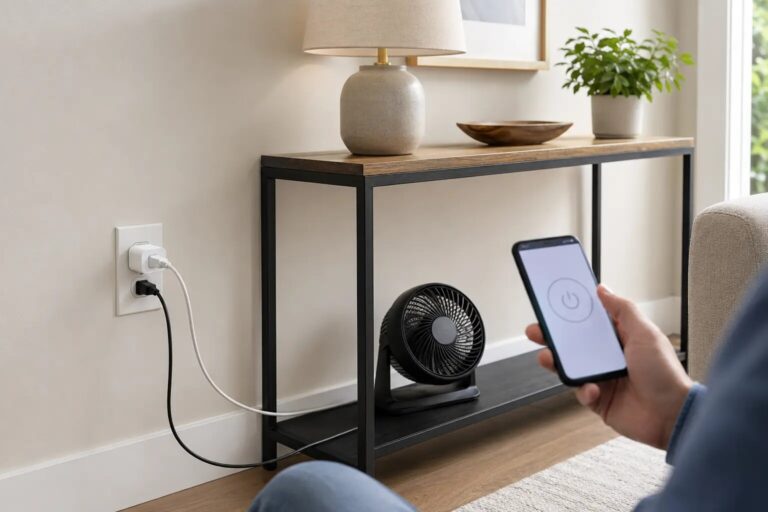
Home energy-monitoring context. Photo: Siân Wynn-Jones / Unsplash.
Tapo P110 vs Kasa EP25 at a glance
Decision point
Tapo P110
Kasa EP25
Energy monitoring
Yes
Yes
Wi-Fi
2.4 GHz
Wi-Fi smart plug
Apple Home/HomeKit
Not the reason to choose this model
Explicitly supported by TP-Link setup documentation
Alexa / Google
Supported
Supported through Kasa ecosystem
Best fit
Tapo-centric energy tracking
Apple Home/Kasa households
Editorial illustration, not a manufacturer photograph or hands-on test.
What matters more than the brand name?
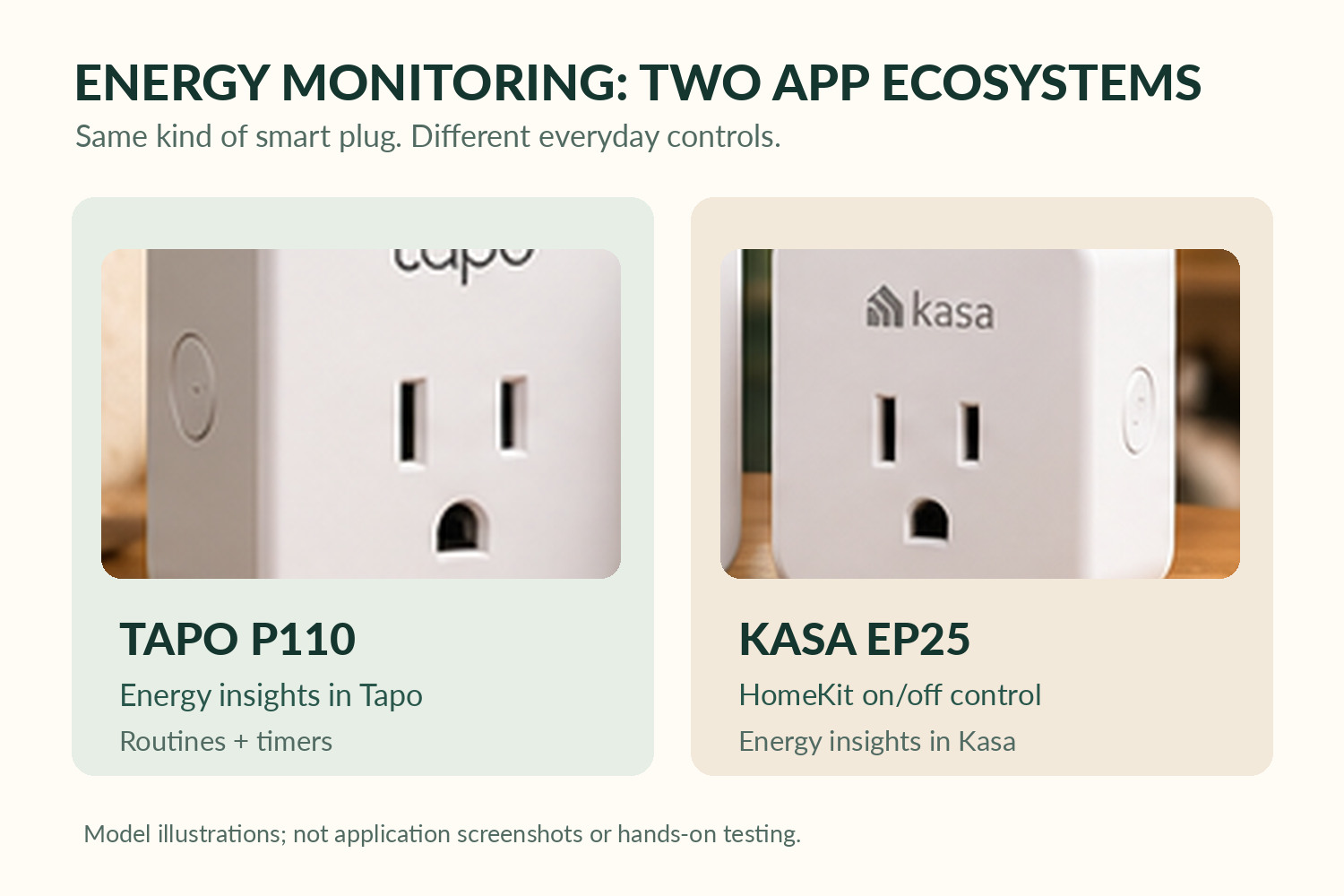
Both plugs can automate an ordinary outlet and both have energy-monitoring positioning. The meaningful split is ecosystem. TP-Link documents the P110 around the Tapo app, energy statistics, schedules, remote control and Alexa/Google/SmartThings compatibility. TP-Link Canada’s EP25 support material specifically documents HomeKit setup, making it the more relevant comparison point for Apple Home users.
Editorial illustration, not a manufacturer photograph or hands-on test.
Tapo P110: best for Tapo-centric energy tracking
TP-Link documents real-time and historical energy monitoring, electricity-rate input, schedules, auto-off and a compact body. Its North American specification lists 2.4 GHz Wi-Fi and a maximum general-use/resistive load of 15 A / 1800 W. Hardware versions vary by region, so match the listing and device version rather than borrowing specifications from another market.
Choose it if: you already use Tapo or want energy data plus straightforward schedules.
Watch for: do not assume every P110 hardware version or regional listing has identical specifications.
TP-Link Canada maintains a current EP25 support path and explicitly documents HomeKit-enabled setup. That makes the EP25 the clearer fit when an Apple Home household wants a compact Kasa plug with energy-monitoring capability rather than building around Tapo alone.
Choose it if: HomeKit/Apple Home is a deciding ecosystem requirement.
Watch for: confirm the exact pack and hardware version on the Canadian listing before purchase.
Technical claims were mapped to current TP-Link/Tapo documentation, including TP-Link Canada support pages for both exact models. Amazon.ca identity was checked by public-web evidence on September 30, 2026. Live price, ratings and availability were not used as editorial evidence.
Check current listings
Compare the current Amazon.ca product pages
Use the product pages to confirm the exact variant, current price and availability before ordering.
Prices change often, check Amazon for the current price.
Frequently Asked Questions
Do both plugs actually monitor energy use?
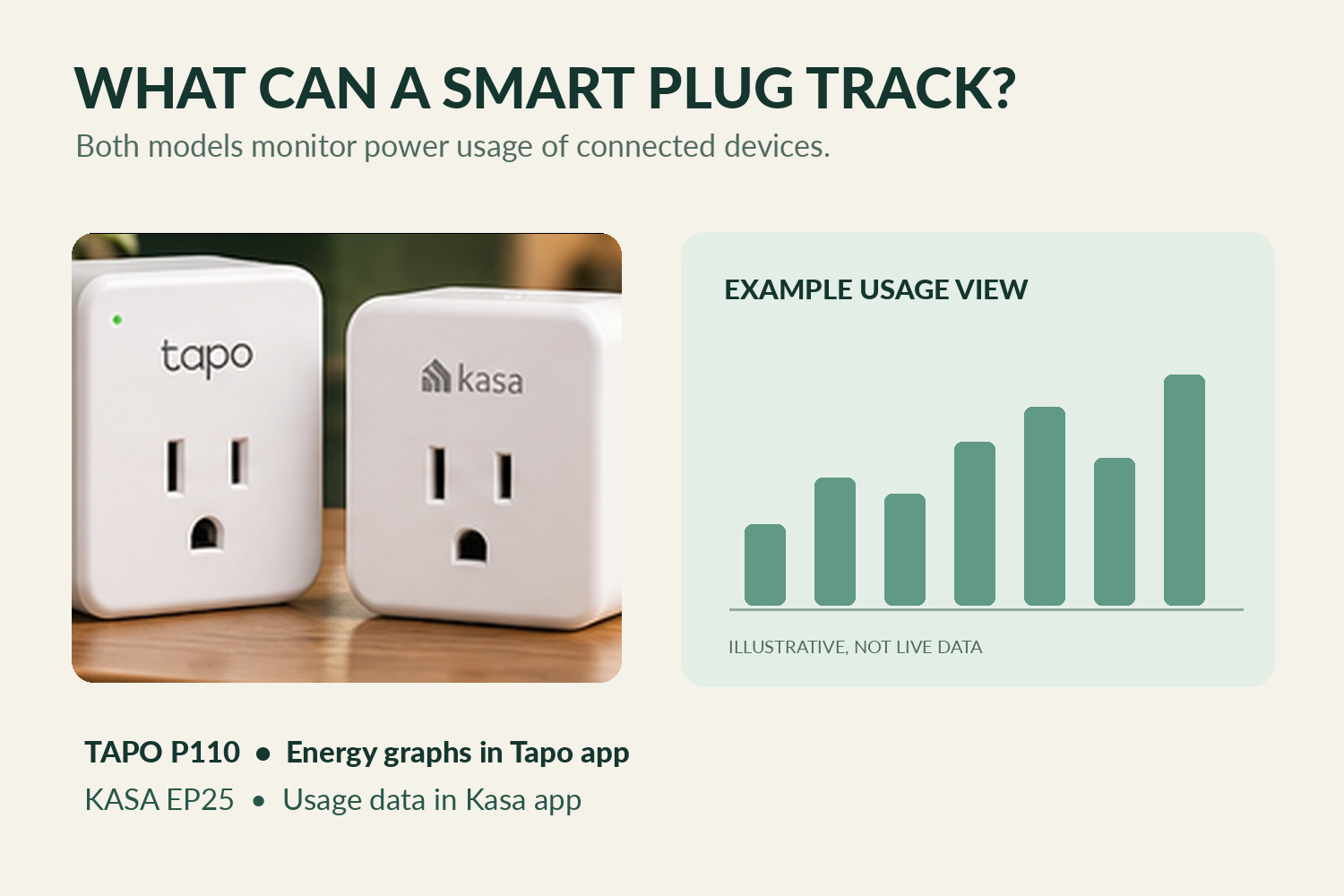
Yes. Both the Tapo P110 and the Kasa EP25 are positioned as energy-monitoring smart plugs. The P110 adds real-time and historical energy statistics in the Tapo app, including an electricity-rate input so you can estimate running costs.
Does the Tapo P110 need a hub?
No. TP-Link documents direct Wi-Fi setup through the Tapo app, with no proprietary hub required. It runs on 2.4 GHz Wi-Fi like the EP25.
Which plug should I buy for Apple Home and HomeKit?
The Kasa EP25. TP-Link Canada specifically documents HomeKit setup for this exact model, which makes it the clearer fit for an Apple Home household. HomeKit is not the reason to choose the P110.
Can I plug any appliance into one of these?
No. Stay within the plug's rated load and the appliance manufacturer's requirements. The P110's North American specification is a maximum general-use and resistive load of 15 A / 1800 W, and high-draw appliances deserve extra caution with any smart plug.
Does the Tapo P110 work with Alexa or Google Assistant?
Yes. TP-Link documents Alexa, Google and SmartThings compatibility for the P110 alongside its Tapo app workflow of schedules and auto-off timers. The EP25 covers Alexa and Google through the Kasa ecosystem.
Which app will I live in, Tapo or Kasa?
That is the real decision in this comparison. If your home already runs on Tapo, the P110 keeps control and energy history in one workflow. If your home is built around Kasa or Apple Home, the EP25 fits without adding a second ecosystem.