FoodCycler Eco 5 vs Reencle Prime in Canada: Which Food-Waste System Fits?
FoodCycler Eco 5 and Reencle Prime take very different approaches to kitchen food waste. Compare batch reduction, continuous microbial processing, energy, maintenance and daily fit.
8 min read
Products compared
Current picks at a glance
Price-neutral comparison based on verified product identity, official specifications, and buyer fit. Check Amazon.ca for current price and availability.
Amazon.ca prices and availability can change. Hamejur does not publish cached marketplace prices in no-API mode.
Kitchen & Food
If your goal is to keep food scraps out of the kitchen garbage, the FoodCycler Eco 5 and Reencle Prime solve the problem in fundamentally different ways. The Eco 5 is the easier fit for households that prefer a defined batch: load its bucket, run a drying-and-grinding cycle, then empty it. Reencle Prime makes more sense when you want a continuously active microbial system that accepts scraps throughout the day.
Quick verdict: which should you buy?
Choose FoodCycler Eco 5 if you want a contained appliance-style workflow, a 5 L bucket and a cycle that starts and finishes on demand. Choose Reencle Prime if you would rather keep a living microbial bed running continuously and add food waste as it is generated. The most important distinction is not capacity alone; it is batch processing versus continuous biological processing.
Disclosure: Hamejur may earn a commission from qualifying Amazon.ca purchases. This does not change the price you pay or how products are evaluated.
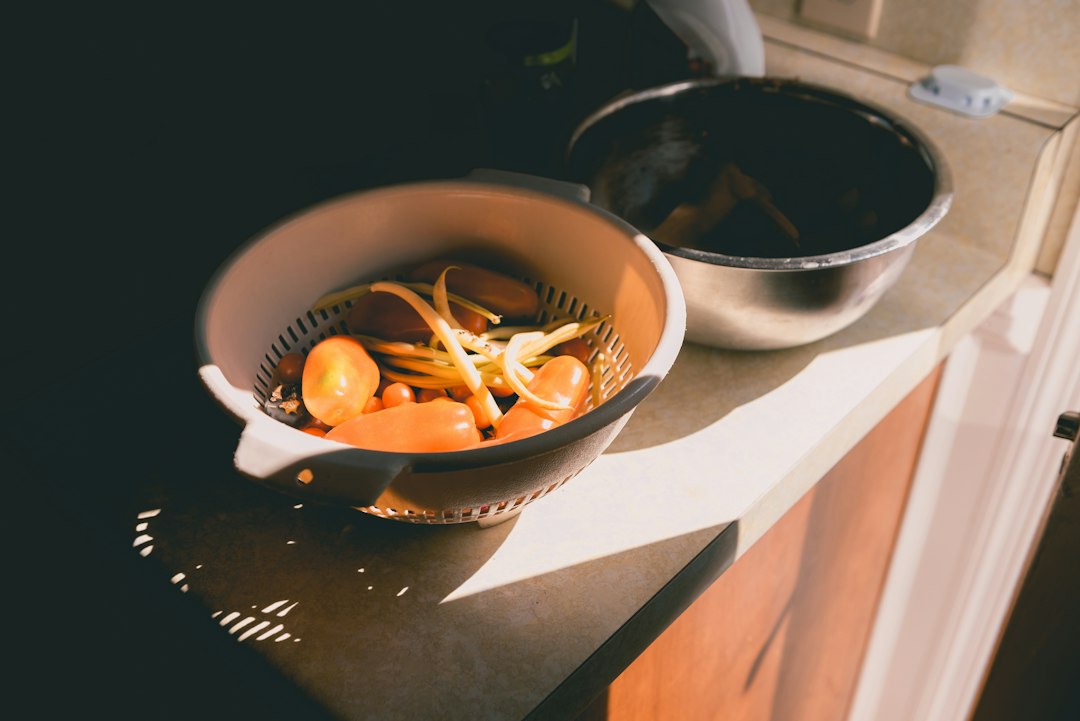
Food-waste processing starts with the scraps your household actually produces. Context photo: Drew Dempsey/Unsplash.
At a glance
Decision point
FoodCycler Eco 5
Reencle Prime
Core architecture
Batch drying and grinding
Continuous microbial decomposition with mixing and heat
Published capacity metric
5 L removable bucket
0.7 kg/day recommended, 1 kg/day maximum
Typical operating rhythm
Load, run a 4–9 hour cycle, empty
Add scraps through the day and maintain the active system
Energy metric from manufacturer
Under 1.5 kWh per cycle
Average 52 W; about 1.25 kWh/day
Consumable / maintenance
Carbon filtration and routine cleaning
Microbial starter care plus carbon-filter replacement
Best fit
People who like a clear beginning and end to each batch
People who want a continuously available food-scrap destination
The capacity numbers are intentionally shown in their native units. A 5 L bucket and kilograms processed per day measure different things, so converting them into a single “bigger is better” score would be misleading.
What matters most with countertop food-waste systems
The first question is what you expect the machine to do. These devices are often grouped together as countertop composters, but the output and process are not identical. FoodCycler uses heat, aeration and grinding to shrink and dry food scraps. Reencle keeps a microbial environment active so organic material is biologically broken down while the unit mixes and manages temperature.
That architecture affects almost everything else: whether you wait for a cycle to finish, whether you can add scraps mid-process, what maintenance looks like, how energy use is described, and what the resulting material is like. For Canadian homes, counter footprint, ventilation, outlet access and winter storage habits can matter as much as headline capacity.
Batch reduction versus continuous microbial processing
FoodCycler Eco 5 behaves more like an appliance cycle. Its 5 L bucket is loaded, the machine runs a multi-hour drying/grinding cycle, and the reduced material is removed afterward. FoodCycler says Eco 5 can reduce food-waste volume by up to 90% and uses less than 1.5 kWh per cycle.
Reencle Prime behaves more like a managed indoor biological system. Reencle specifies a recommended daily input of 0.7 kg and a 1 kg maximum, with an active microbial starter, heating wire, mixing motor and fan. Its published average power is 52 W and energy use is about 1.25 kWh per day.
Those numbers should not be compared as if they were the same test. Eco 5’s energy figure is per batch; Reencle’s is per day. Your actual ownership pattern depends on how often you run the Eco 5 and how continuously you operate the Reencle.
Detailed product evaluations
FoodCycler Eco 5
The Eco 5 is the more conventional choice if you want an appliance you can deliberately start and stop. The removable 5 L bucket gives you a simple physical limit for a batch, while the 4–9 hour published cycle range sets expectations for when the machine will be occupied. FoodCycler describes the process as drying, grinding and cooling, with a refillable carbon-filter system for odour control.
Best fit: kitchens where scraps can accumulate in the bucket until you are ready to run a batch. Watch for: cycle time and filter upkeep. The dried, ground output should also not be treated as automatically equivalent to mature garden compost; follow FoodCycler’s guidance for how and where to use it.
Amazon.ca prices and availability can change. Check the product page for current purchase details.
Reencle Prime
Reencle Prime is better understood as a continuously active system. Its official specifications call for about 0.7 kg of food waste per day under normal use, up to 1 kg maximum, in a 14 L chamber. A microbial starter, heating wire and mixing system keep the process going rather than waiting for a discrete batch cycle.
Reencle lists the Prime at 305 × 331 × 467 mm and about 9.1 kg, so it asks for more vertical space than many small countertop appliances. It also recommends replacing the carbon filter every 9–12 months. Best fit: households that want to deposit scraps continually. Watch for: the need to keep the microbial environment healthy and follow the manufacturer’s feeding and maintenance rules.
Amazon.ca prices and availability can change. Check the product page for current purchase details.
Which system fits different households?
Small household with irregular food waste: Eco 5’s batch model is easier to leave idle between uses.
Household producing scraps every day: Reencle Prime’s continuous workflow may feel more natural because you do not need to wait for a batch boundary.
You want the simplest mental model: Eco 5. Fill, process, empty.
You want fewer “start a cycle” moments: Reencle Prime. The trade-off is that you are maintaining an active biological process.
You are comparing power use: calculate from your own usage pattern. Per-cycle and per-day figures are not directly interchangeable.
Setup, placement and ownership
Both are 120 V appliances intended for indoor household use, but placement should leave the ventilation paths specified by the manufacturer unobstructed. Reencle’s lid-open height and taller body deserve special attention under upper cabinets. Eco 5 owners should plan for where the bucket will sit between loads and how often they expect to run cycles.
Consumables are part of the ownership equation. Reencle specifies a 9–12 month recommended carbon-filter replacement cycle and relies on its microbial starter. FoodCycler also uses carbon filtration, although its daily routine is more about bucket cleaning and running discrete cycles. Neither system eliminates the need to learn which scraps and quantities the manufacturer allows.
Countertop placement, access and daily feeding habits matter as much as capacity. Stock context photo: Neakasa/Unsplash; not either product compared.
Buying advice: avoid these comparison mistakes
Do not compare 5 L with 0.7 kg/day as though one is a larger capacity number. One describes a vessel; the other describes processing throughput. Also avoid assuming that “countertop composter” always means finished compost. These machines reduce and transform food waste through different mechanisms.
Before ordering, measure the intended location, including lid clearance, and think about your actual household rhythm. If food waste arrives in bursts after meal prep, a batch unit can be efficient. If scraps appear steadily all day, a continuous system can reduce the temptation to keep a separate waiting bin.
Is the FoodCycler Eco 5 the same type of machine as Reencle Prime?
No. Eco 5 is a batch thermal/mechanical food-waste reducer. Reencle Prime uses an active microbial process designed for continuous feeding.
Which is easier if I only have food scraps a few times per week?
The Eco 5’s start-and-finish batch workflow is usually easier to match to intermittent use. Reencle makes more sense when you want a continuously active system.
Can I compare their energy numbers directly?
Not cleanly. FoodCycler publishes energy per cycle, while Reencle publishes average power and daily energy. Your real comparison depends on how often you run each system.
Do these machines eliminate maintenance?
No. Both need cleaning and odour-control attention. Reencle also requires care of its microbial environment and periodic carbon-filter replacement.
Do both machines make finished garden compost?
Do not assume that. Their processes and outputs differ. Follow each manufacturer’s directions for handling or using the resulting material.
Hamejur conclusion
For most buyers, the decision is architectural rather than numerical. FoodCycler Eco 5 is the cleaner fit when you want a familiar appliance routine with a defined 5 L batch and a start-to-finish cycle. Reencle Prime is the more distinctive option when you want a continuously available microbial system and are comfortable maintaining that process. The choice reverses if your household rhythm reverses: occasional batches favour Eco 5, steady daily scraps favour Reencle.
Check current listings
Compare the current Amazon.ca product pages
Use the product pages to confirm the exact variant, current price and availability before ordering.
Hamejur verified the exact Amazon.ca product identities on September 22, 2026, then used manufacturer documentation for technical claims rather than marketplace reviews or cached pricing. Core sources: FoodCycler Eco 5 product documentation, Reencle Prime product documentation, and Reencle model specifications. Amazon.ca pricing and availability can change; this article intentionally remains price neutral.
Breville Milk Café and Nespresso Aeroccino 4 take different approaches to milk. Compare capacity, temperature control, foam programs, cleaning and daily coffee…