Anova Precision Cooker 3.0 vs Breville Joule Turbo in Canada
Compare Anova Precision Cooker 3.0 and Breville Joule Turbo by controls, Wi-Fi, mounting, guided cooking, container compatibility and ownership for Canadian kitchens.
10 min read
Kitchen & Food · Sous vide cookers
Quick answer: The Anova Precision Cooker 3.0 is the better fit if you want strong on-device controls, dual-band Wi-Fi, an adjustable clamp, and a conventional immersion-circulator workflow that does not depend on keeping your phone beside the pot. The Breville Joule Turbo is the better fit if you prefer a slimmer app-centred system with guided cooking, a magnetic base, Autopilot features, and Breville’s Turbo mode for supported recipes. Both can deliver precise low-temperature cooking; the bigger difference is how you want to control and mount the circulator.
Quick Verdict: Anova Precision Cooker 3.0 or Breville Joule Turbo?
Choose Anova Precision Cooker 3.0 if…
You want a 1100 W circulator with dual-band Wi-Fi, a two-line touch display, an adjustable clamp, and a strong balance between direct control and app control.
Choose Breville Joule Turbo if…
You want a narrow circulator built around the Breville+ app, magnetic mounting, guided recipes, Autopilot, and Turbo cooking for supported recipes.
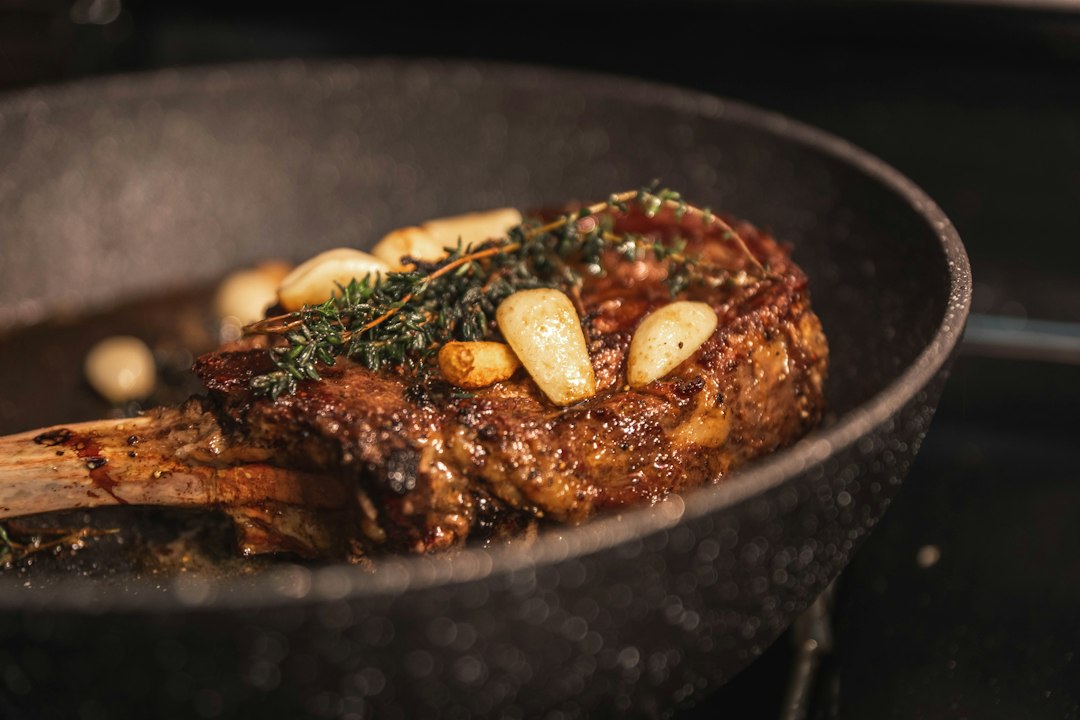
Sous vide controls the water-bath stage; many foods still benefit from a brief finishing sear. Photo: Marcelo de la Torre / Unsplash.
Products compared
Current picks at a glance
Price-neutral comparison based on verified product identity, official specifications, and buyer fit. Check Amazon.ca for current price and availability.
Amazon.ca prices and availability can change. Hamejur does not publish cached marketplace prices in no-API mode.
At-a-Glance Decision Table
Decision point
Anova Precision Cooker 3.0
Breville Joule Turbo
Control style
Two-line touch display plus app
App-centred Breville+ workflow
Connectivity
Dual-band Wi-Fi
Connected Breville+ experience
Power
1100 W listed by Anova
High-performance immersion heating; choose mainly by workflow rather than wattage
Mounting
Adjustable clamp
Magnetic base; accessory clamp available for some vessels
Physical size
Conventional circulator body
About 1.85 × 1.85 × 12.28 in
Guided cooking
Anova app recipes and remote control
Visual Doneness, Autopilot, Primetime and Turbo-supported recipes
Best fit
Direct controls and flexible mounting
Guided app cooking and compact storage
Sous vide time and temperature depend on food type, thickness, starting temperature, and food-safety requirements. Use current manufacturer guidance and a reliable recipe source rather than copying a time from an unrelated cut.
What Matters Most in an Immersion Circulator
An immersion circulator has a simple technical job: heat a water bath to a target temperature and circulate that water evenly. But the buying decision goes beyond raw heater power. Mounting determines which pots and containers are convenient. Controls determine whether you can change a cook without opening an app. Connectivity affects remote monitoring. Physical size determines how easy the circulator is to store, and software design affects whether guided cooking feels helpful or restrictive.
Container size also matters. A large water bath asks more from the heater and takes longer to come up to temperature. Insulation and a lid can reduce heat loss during long cooks. A high wattage figure helps with warm-up, but precision and workflow are the reasons most people keep using a circulator after the novelty wears off.
Technology and Architecture Differences
Anova gives more control at the device itself
Anova’s Precision Cooker 3.0 lists 1100 W of power, dual-band Wi-Fi, and a two-line touch-screen display. That means you can set or adjust a cook at the circulator while still having app connectivity for remote monitoring and recipes. The adjustable clamp is also useful when your preferred pot is not magnetic.
Joule Turbo is designed around guided software
Breville’s Joule Turbo is much more app-centred. The Breville+ platform includes guided recipe features such as Visual Doneness, Autopilot, and Primetime, while Turbo mode is designed to shorten the cooking time for supported recipes. This is most valuable when you want the software to guide the workflow rather than simply act as a remote thermostat.
The mounting systems favour different kitchens
Joule’s magnetic base can make setup extremely clean in compatible ferromagnetic pots. The circulator can stand against the bottom instead of hanging from the rim. Anova’s adjustable clamp is more universal across ordinary stock pots and dedicated plastic containers. If your cookware is not magnetic, the clamp approach is easier to predict.
Detailed Product Evaluations
Anova Precision Cooker 3.0
Best for direct controls and flexible pot mounting. Anova lists the Precision Cooker 3.0 at 1100 W and equips it with dual-band Wi-Fi plus a two-line touch display. That makes it easy to start a straightforward cook directly on the device without giving up connected features.
The adjustable clamp is an underrated advantage. Sous vide users often move between a saucepan, stock pot, and dedicated container. A clamp that can adapt to different wall thicknesses and depths makes the circulator less dependent on one particular vessel. It also makes the Anova easier to recommend to someone who wants a familiar, hardware-first cooking tool.
Watch for: it is physically more conventional than the slim Joule and may take more drawer or cabinet space. If your main reason for buying a connected circulator is highly guided app cooking, Breville’s software experience may appeal more.
Amazon.ca prices and availability can change. Check the product page for current purchase details.
Breville Joule Turbo Sous Vide
Best for guided app cooking and compact storage. Breville lists the Joule Turbo at about 1.85 inches square and 12.28 inches tall, giving it a notably slim body. Its magnetic base makes mounting simple in compatible cookware, and Breville lists support for bulk cooking vessels up to 10 gallons when the setup and accessory requirements are met.
The key differentiator is software. Breville+ can guide you through doneness selection and cooking steps, while Turbo mode is intended to speed supported recipes compared with a traditional fixed-time sous vide method. Autopilot and Primetime add more scheduling flexibility when you want the app to help coordinate when food is ready.
Watch for: the experience is more app-centred than Anova’s. The magnetic base is convenient only when the vessel material supports it; for other setups you may need the appropriate clamp or another stable mounting arrangement.
Amazon.ca prices and availability can change. Check the product page for current purchase details.
Scenario-Based Decision Guide
You want to cook without reaching for your phone: Anova is the safer choice because the on-device display and controls are central to its design.
You want guided doneness and app-led recipes: Joule Turbo has the stronger software-first proposition.
You use several different pots and containers: Anova’s adjustable clamp is easier to adapt.
You value compact storage: Joule Turbo’s narrow body is easier to tuck into a drawer or cabinet.
You often plan meals around a specific serving time: Breville’s app features such as Primetime and Autopilot can be useful for supported recipes.
Container Compatibility and Setup
For either circulator, use a heat-safe vessel large enough to maintain water flow around the bag. Keep the water level between the manufacturer’s minimum and maximum marks throughout the cook. Long cooks lose water to evaporation, so a lid, cover, or purpose-built sous vide container can reduce the chance of the level dropping too far.
Anova’s clamp attaches to the side of a pot or container. Joule’s magnetic base works best with a compatible metal bottom; other vessels need a stable alternative mount. In both cases, avoid blocking the pump intake or outlet with a bag, rack, or the wall of an undersized container.
Food Safety, Bags, and Long-Term Ownership
Sous vide cooking is precise, but precision does not remove food-safety rules. Temperature and time work together. A lower temperature can require a longer hold to reach the intended pasteurization effect, and some foods should not be held in the temperature danger zone for extended periods. Use current food-safety guidance and validated recipes for the specific food.
You also need suitable bags or containers. Heat-safe vacuum bags are common, but properly rated zipper bags can work for many cooks. Keep seams above the water line where practical, remove excess air, and check the seal before a long cook. Neither Anova nor Joule eliminates the need for a finishing step when you want browning; steaks and many proteins still benefit from a very hot, brief sear after the bath.
The circulator handles precise low-temperature cooking; texture and browning usually come from the finishing step. Photo: patrick le / Unsplash.
Buying Advice and Avoidable Mistakes
Do not choose only by wattage. Controls, mounting, software, and vessel fit affect daily use more.
Do not use a container so small that bags block circulation around the heater and pump.
Do not assume precise temperature means every recipe is automatically food-safe.
Do not overfill bags; food should stay exposed to circulating water across as much surface area as possible.
Do not skip the finishing step when texture and browning are part of the dish.
No. The core cooking task is local temperature control. Wi-Fi is mainly useful for remote monitoring, notifications, recipes, and app-led features. Anova is especially convenient if you want strong direct controls as well.
Does Joule Turbo always cook twice as fast?
No. Turbo is a Breville feature for supported recipes and should not be treated as a universal halving of every sous vide cook. Follow the app’s current guidance for a supported dish.
Which is easier to use with non-magnetic pots?
Anova’s adjustable clamp is the more straightforward default. Joule’s magnetic foot is excellent with compatible cookware, but a non-magnetic vessel may require another mounting method.
Do I need a vacuum sealer?
Not for every recipe. Heat-safe zipper bags can work for many cooks using the water-displacement method. A vacuum sealer becomes more useful for batch prep, freezer storage, and keeping air out of long or high-volume cooks.
Who should skip both circulators?
Skip both if you mainly want fast weeknight cooking and do not value precise low-temperature results, advance meal prep, or app-connected cooking. A pressure cooker, air fryer, or conventional pan may better match that goal.
What I Would Choose
I would choose the Anova Precision Cooker 3.0 for most first-time sous vide buyers because it combines direct touch controls, dual-band Wi-Fi, strong heater output, and a flexible clamp without making the phone the centre of every cook. I would choose the Breville Joule Turbo if I specifically wanted Breville’s guided software, slim storage, magnetic mounting, and Turbo-supported recipes. The recommendation reverses when app guidance matters more to you than direct hardware controls.
Check current listings
Compare the current Amazon.ca product pages
Use the product pages to confirm the exact variant, current price and availability before ordering.
Technical specifications and feature descriptions were checked against the current Anova Precision Cooker 3.0 page and Breville Canada Joule Turbo page. Amazon.ca marketplace identity for ASINs B0BQ9F56WV and B0C384T4P2 was rechecked on September 15, 2026. Hamejur does not publish cached marketplace prices, availability claims, star ratings, or copied review text. Recommendations are editorial inferences from verified controls, mounting design, software features, vessel compatibility, and ownership workflow rather than claims of hands-on testing.
FoodSaver VS1150 vs Nesco VS-12 in Canada compared by wattage, footprint, seal settings, pressure choices, roll storage, cutter, bag width and food-prep…